After Testing 10 Meditation Music Apps for 4 Months, This One Finally Cleared My Mental Clutter
Have you ever felt too overwhelmed to focus on your day, your goals, or even your own thoughts? I was stuck in constant mental noise—until I found a simple tool that quietly reshaped my routine. It wasn’t magic, just the right meditation music app used the right way. Over months of real-life testing, one app stood out, not for flashy features, but for how it helped me organize my mind, plan my projects, and reclaim calm. Let me show you how it works.
The Chaos Before the Calm: How My Creative Projects Fell Apart
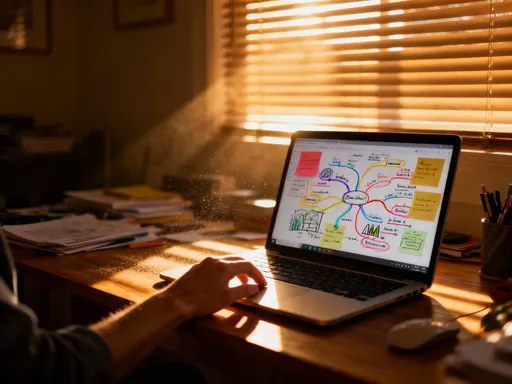
I used to think I just needed more time. More hours in the day, more energy, more motivation. But the truth was, I had plenty of time—I just couldn’t use it. I’d sit down to work on a project, like planning a family event or organizing my home office, and within minutes, my mind would spin off into five different directions. Did I pay the water bill? Was I falling behind at my volunteer role? Why hadn’t I called my sister back? The mental noise was relentless, like a browser with fifty tabs open, none of them loading properly.
One evening, I remember staring at a blank document titled “Summer Trip Planning.” It was supposed to be fun—researching destinations, booking accommodations, imagining my kids’ faces when they saw the beach. Instead, I felt paralyzed. My chest was tight, my shoulders tense, and my thoughts were racing. I wasn’t lazy. I wasn’t unmotivated. I was emotionally overwhelmed, and my brain didn’t know how to settle. That night, I went to bed defeated, the document still empty, my dream vacation feeling more like a burden.
This wasn’t a one-time thing. It happened every time I tried to focus on something meaningful—whether it was writing a speech for my book club, organizing a school fundraiser, or even deciding what to cook for dinner. The pressure wasn’t from outside. It came from inside—this constant hum of unfinished thoughts, unresolved worries, and unmet expectations. I realized I wasn’t managing my time. I was drowning in my own mind.
And it wasn’t just about productivity. My relationships suffered too. I’d snap at my kids over small things because I was already frayed. I’d cancel plans with friends, not because I didn’t want to see them, but because I felt too mentally cluttered to be present. I wasn’t living—I was reacting. Something had to change. I knew I needed a way to quiet the noise, not just for my projects, but for my peace. That’s when I turned to meditation music.
Why I Tried Meditation Music (And Almost Gave Up)
I’ll be honest—I wasn’t convinced at first. The idea of meditation music felt a bit… woo-woo to me. I pictured candles, incense, and people chanting in perfect harmony while I struggled to find my car keys. But I was desperate. I read a few articles about how sound can influence focus and mood, and I thought, Why not? Maybe a little background music could help me slow down.
So I downloaded my first app. And then another. And another. Within a week, I had ten different meditation music apps on my phone. Some promised instant calm. Others claimed to boost creativity or improve sleep. I tried them all—at different times of day, in different moods, even during my morning walks. But most of them fell short. One had such a complicated interface that I spent more time figuring out how to play a track than actually listening. Another was full of pop-up ads that ruined the whole experience. “Buy premium now!” flashed every three minutes. Not exactly peaceful.
Then there was the music itself. Some tracks sounded like they were made by robots in a sci-fi lab—beeping, whirring, with artificial tones that made me more anxious than relaxed. Others were too repetitive, like a loop of ocean waves that, after ten minutes, started to feel hypnotic in a creepy way. I tried guided meditations, but the voices either bored me or annoyed me. One narrator kept saying, “Just let go,” which, honestly, made me want to throw my phone across the room. I wasn’t letting go—I was holding on for dear life.
After a few weeks, I was ready to give up. Maybe meditation music just wasn’t for me. Maybe I was too busy, too wired, too… me. But then I remembered something a friend once told me: “It’s not about finding the perfect tool. It’s about finding the one that fits your life.” So I decided to give it one more try—not with the goal of becoming a zen master, but with the simple hope of feeling a little less frazzled.
The App That Finally Fit: Simplicity Meets Purpose
What changed wasn’t a miracle. It was a moment of quiet clarity. I found an app—no flashy logo, no aggressive marketing—that just felt different from the start. The design was clean, almost minimalist. No cluttered menus, no confusing icons. Just a simple screen with a few categories: Focus, Calm, Sleep, and Reflect. I tapped on “Focus,” chose a 15-minute track called “Morning Light,” and pressed play.
The music began softly—a gentle blend of piano, light strings, and the faint sound of birds chirping. It wasn’t dramatic. It didn’t try to hypnotize me or fix my life in three minutes. It just… existed. And something about that simplicity made me breathe deeper. I didn’t feel pressured to “meditate correctly” or empty my mind. I just listened. And for the first time in weeks, my thoughts started to slow down.
That evening, I used it again before sitting down to plan my daughter’s birthday party. I set a timer for 10 minutes, played a track called “Clear Mind,” and closed my eyes. I didn’t fall into a deep meditative state. I didn’t have a spiritual awakening. But when I opened my eyes, I felt ready. Not overwhelmed. Not anxious. Ready. I opened my planner, wrote down the first three steps, and actually followed through. That small win meant everything.
The difference wasn’t in the features—it was in the feeling. This app didn’t treat me like a user to be monetized. It treated me like a person trying to do my best. The music sounded natural, like something you’d hear in a quiet garden or a sunlit room. No artificial tones, no forced rhythms. Just gentle, evolving melodies that supported focus without demanding attention. I didn’t need to be perfect. I just needed to show up. And the app met me there.
Turning Sound Into Structure: How Music Organized My Days
Here’s what I didn’t expect: the music didn’t just help me relax. It helped me organize. I started using specific tracks as signals—like auditory bookmarks for different parts of my day. In the morning, “Morning Light” became my cue to plan. I’d play it while sipping tea, reviewing my calendar, and setting three priorities for the day. It wasn’t about doing more. It was about doing what mattered.
When I sat down to work on a creative project—like writing a newsletter or designing a presentation—I’d play “Deep Flow.” The tempo was slightly faster, with a subtle rhythm that kept my mind engaged but not distracted. I noticed I stopped checking my phone every two minutes. I wasn’t fighting focus—I was riding it. The music created a kind of mental container, like drawing a circle around my attention and saying, “This is where we work now.”
In the evening, I’d switch to “Evening Stillness”—a softer, slower track with warm cello tones and the sound of distant wind. I’d play it while journaling or folding laundry, using it as a transition from “doing” to “being.” It helped me let go of the day’s stress instead of carrying it into bedtime. I wasn’t just winding down. I was reflecting. What went well? What could I do differently tomorrow? The music didn’t give me answers, but it gave me space to ask the questions.
Over time, these small rituals added up. I wasn’t just using music to relax—I was using it to structure my life. The sound became a rhythm, and that rhythm brought order. I stopped feeling scattered because I had clear transitions. I wasn’t guessing when to focus or when to rest. The music told me. And in a world full of noise, having one gentle voice guiding me made all the difference.
From Mindful Minutes to Real Projects: Building a Life System
The real shift happened when I stopped seeing the app as a quick fix and started seeing it as part of a system. I began pairing the music with other simple tools—nothing fancy, just things that worked. For example, I’d play “Morning Light” while opening my digital notebook. I’d write down my top three goals for the day, one personal and two practical. Maybe it was calling my mom, finishing a report, or meal-prepping for the week. Then, when the music ended, I’d start.
One of my biggest projects was planning a family trip to the mountains. In the past, this would have overwhelmed me—booking cabins, planning hikes, packing lists, coordinating schedules. But this time, I broke it down. I used “Deep Flow” music during my planning sessions, setting a timer for 25 minutes. When the timer went off, I’d take a short walk or make tea. I used a shared calendar to keep everyone on track and a simple checklist app to manage tasks. The music didn’t do the work for me, but it made the work feel possible.
I even started a gratitude journal. Every night, with “Evening Stillness” playing softly in the background, I’d write three things I was thankful for. Some days it was big—“My son aced his science test.” Others were small—“I found a quiet moment to drink my coffee.” But over time, this practice shifted my mindset. I wasn’t just managing tasks. I was nurturing joy.
The app became the anchor, but the system was mine. I combined it with tools that fit my life—paper planners, voice notes, shared family calendars. The music didn’t replace these things. It enhanced them. It gave me the mental clarity to use them well. And that’s when I realized: technology doesn’t have to be complicated to be powerful. Sometimes, the simplest tools create the biggest change.
What I Learned About Myself Along the Way
Here’s the unexpected gift: I didn’t just get better at planning. I got better at understanding myself. The quiet moments with the music became mirrors. I started noticing patterns—like how I’d avoid certain tasks when I was anxious, or how I’d say yes to things I didn’t have time for because I didn’t want to disappoint anyone.
One afternoon, I was supposed to work on a presentation, but I kept opening my email instead. I played “Clear Mind” and just sat there, listening. After a few minutes, I realized I wasn’t avoiding the work—I was afraid of not doing it well enough. That awareness changed everything. Instead of pushing through shame, I gave myself permission to start small. I wrote one slide. Then another. And soon, I was in flow.
Another time, I noticed I kept skipping my evening reflection. I told myself I was “too tired,” but the truth was, I didn’t want to face how much I’d overcommitted that week. The music helped me pause. It didn’t judge me. It just waited. And in that space, I could be honest. I started saying no more often—not out of guilt, but out of care for myself.
These weren’t dramatic breakthroughs. They were quiet realizations, like turning on a light in a room you’ve been stumbling through. The music didn’t fix my emotions. It helped me feel them. And in a world that tells us to hustle, multitask, and do it all, learning to pause and listen was revolutionary.
How You Can Start Small and Build Your Own System
If you’re feeling overwhelmed, here’s my advice: start with five minutes. That’s it. No need for a full meditation practice. No need to download ten apps. Just pick one quiet time—maybe right after you wake up, during your lunch break, or before bed—and play a gentle track. Find a spot where you won’t be interrupted. Sit comfortably. Close your eyes if you want, or just look out the window.
Pair it with something simple. Maybe it’s sipping your tea slowly. Or writing one sentence in a notebook. Or just breathing. The goal isn’t to clear your mind completely. It’s to create a small pocket of calm in your day. Think of it like watering a plant—you don’t flood it. You give it a little each day, and over time, it grows.
After a few days, try linking the music to a routine. Play it while planning your day, reviewing your week, or winding down at night. Let it become a signal—your personal “focus mode” or “rest mode” trigger. You don’t need to do it perfectly. Some days you’ll forget. Some days you’ll only have two minutes. That’s okay. Progress, not perfection.
And don’t feel pressured to use the same app I did. Explore. Try different sounds—nature, piano, strings, ambient. See what feels soothing to you. The right music won’t feel forced. It’ll feel like a deep breath. Once you find it, let it become part of your rhythm. Combine it with tools you already use—a planner, a to-do list, a calendar. Let it support your life, not complicate it.
Conclusion: More Than an App—A Quiet Companion for a Fuller Life
Looking back, I realize the app didn’t change my life overnight. It changed my days. And over time, those calmer, clearer days added up to a calmer, clearer life. I’m not perfect. I still have busy mornings and stressful weeks. But now I have a tool—a quiet companion—that helps me return to myself.
The right meditation music didn’t just improve my focus. It improved my patience. My creativity. My ability to show up for my family, my work, and myself. It taught me that calm isn’t the absence of noise. It’s the presence of intention. In a world that glorifies busyness, choosing to pause is an act of courage.
So if you’re feeling scattered, overwhelmed, or just in need of a little more peace, I encourage you to try this simple practice. Let sound be your guide. Let it help you create space, structure, and stillness. You don’t need a perfect app or a perfect life. You just need a few quiet minutes, a little consistency, and the willingness to listen. Because sometimes, the softest sound can make the loudest difference.